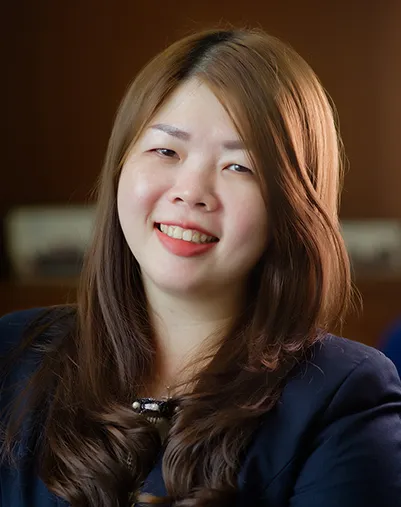
ChM Ts. Betty Chang Yea Sze

Manager, Production Department – Central Region Office
Sarawak Water Sdn. Bhd.
ChM Ts. Betty Chang is an experienced water industry professional with extensive experience in water treatment operations, water quality management, and production leadership. She currently serves as the Manager of the Production Department, Central Region Office, Sarawak Water Sdn. Bhd., where she oversees water production operations and contributes to ensuring reliable and sustainable water supply. Betty holds a Bachelor of Science in Applied Chemistry and a Master’s Degree by Research in Low Dimensional Materials. She is a Registered Chemist (ChM) with the Institut Kimia Malaysia (IKM) and a Professional Technologist (Ts.) registered with the Malaysia Board of Technologists (MBOT).
WEBSITE: betty@sarawakwater.com
Her professional expertise encompasses water treatment, water quality management, process optimisation, operational reliability, and resource efficiency. She has extensive hands-on experience in managing water treatment facilities and leading multidisciplinary teams to ensure the consistent production of treated water in compliance with applicable drinking water standards. Throughout her career, Betty has been involved in initiatives to improve operational efficiency, water quality, and the resilience of water supply systems. She is also involved in the modernisation of water treatment operations, including the upgrading of SCADA and telemetry systems to strengthen operational monitoring and decision-making. Passionate about leadership, innovation, and sustainable development in the water sector, Betty is committed to driving practical improvements and fostering collaboration to address the evolving challenges facing water supply and public utility services.

All session by ChM Ts. Betty Chang Yea Sze

Smart Waste and Water Infrastructure for Growing Cities
FUTURE CITIES
Confronting the essential foundations of urban liveability, this panel examines how IoT telemetry, automated monitoring, and circular economy principles are revitalizing municipal water and waste management systems. Expert speakers detail actionable case studies where smart sensor deployment reduced non-revenue water losses, optimized waste collection routes, and preserved natural water catchment areas. The session reinforces that true urban smartness relies on resilient, technology-enabled primary utilities that support population growth and high industrial output.

Day 1

Loading
Loading...