
Bismillahirrahmanirrahim
Assalamualaikum Warahmatullahi Wabarakatuh
Excellencies
Distinguished Speakers, Sponsors, Guests
Ladies and Gentlemen
Salam Sarawak Maju Makmur and a very Good Morning.
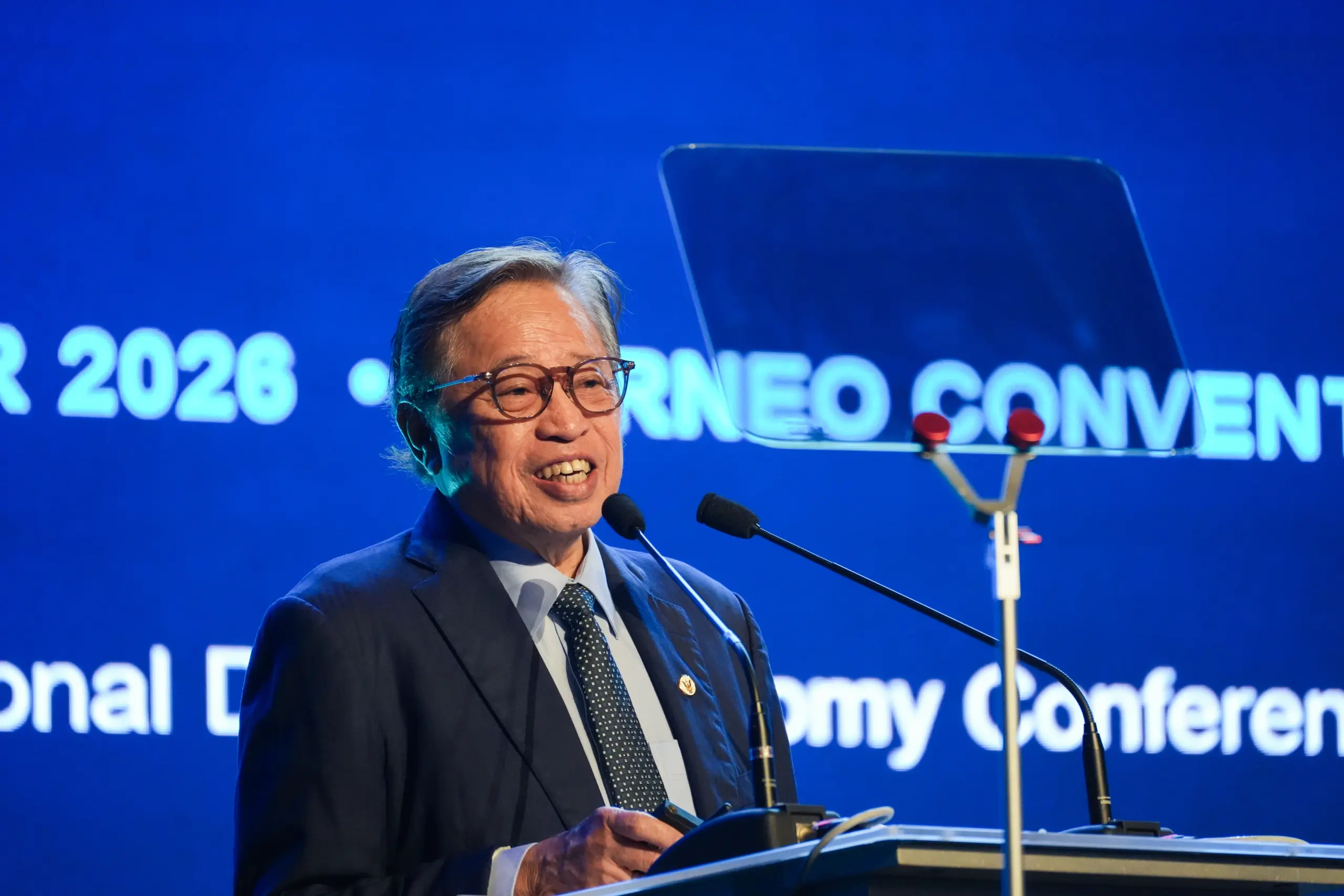
It gives me great pleasure to welcome our guests from across Malaysia, ASEAN and beyond to Kuching, the gateway to Borneo, as we gather once again at this platform, the International Digital Economy Conference Sarawak 2026, IDECS26 to consider not only where technology is taking the world, but where Sarawak intends to position herself within that future.
IDECS has evolved considerably since it began. What started as a conversation around digital transformation has grown into a platform engaging much larger questions about economic competitiveness, strategic technologies, the movement of knowledge and capital across borders, and now the extension of economic infrastructure and opportunity beyond the confines of our planet.
Across ASEAN, new frameworks and infrastructure are creating stronger connections in the movement of data, energy, capital, knowledge and services across borders. The conclusion of negotiations on the ASEAN Digital Economy Framework Agreement (DEFA) last May, together with the continuing development of the ASEAN Power Grid, reflects this direction. With successful implementation of DEFA, ASEAN’s digital economy could reach as much as US$2 trillion by 2030.
For Sarawak, this is not simply about accessing a larger regional market for products and technologies developed elsewhere. It is about being part of that growth through the capabilities, enterprises and knowledge that we build here.
And, Sarawak is already part of this wider regional integration. Our power system is interconnected with West Kalimantan and Sabah, demonstrating in practical terms how infrastructure developed in Sarawak can support economic activity beyond our borders and create opportunities for Sarawak to participate in a wider regional economy.
This widening economic space creates opportunities for Sarawakian businesses to reach new markets, for our researchers to extend the application of their work, and for our young people to participate in regional and global industries that increasingly operate across borders.
This is particularly relevant to the strengths we are developing here, from renewable energy and digital infrastructure to artificial intelligence (AI), semiconductors, aerospace, food systems and the management of our natural resources.
The opportunity, therefore, is not simply for Sarawak to access a larger regional market. It is for Sarawak to contribute to that market.
It is in this context that the theme of IDECS26, “Scaling Innovation Ecosystems for a Borderless Economy: Earth, Orbit and Beyond,” is particularly relevant.
The question is no longer simply what technologies are emerging, but how do we build the capabilities and ecosystem that allow Sarawakian ideas, businesses and knowledge to grow here, connect outward, and scale beyond our borders.
Distinguished Guests, Ladies and Gentlemen,
Sarawak’s digital journey began well before the present acceleration in AI. The Sarawak Digital Economy Strategy 2018 to 2022 provided the early framework for this transformation, followed by the Sarawak Digital Economy Blueprint 2030, which broadened the agenda across government, business, infrastructure, innovation and human capital.
The initiatives we are pursuing today in AI, semiconductors and other advanced technologies build on this established direction. They represent the next stage of Sarawak’s efforts to use technology not only to improve how we work, but also to strengthen our economy and create new areas of value.
The Sarawak Artificial Intelligence Centre, or SAIC, is playing a central role in advancing Sarawak’s AI agenda, bringing together the development of AI capabilities, talent, applications and trusted infrastructure.
This direction is being further shaped through the Sarawak AI Blueprint 2026 to 2030, which is currently being developed to provide a coordinated approach to AI development across government, industry, academia and research.
The Sarawak Sovereign AI Infrastructure Platform, officially launched in August this year, establishes a foundation for locally governed AI computing and the secure management, governance and protection of strategic government data.
By bringing data, computing and AI capabilities under a more integrated and locally governed environment, it can reduce dependence on external platforms while strengthening Sarawak’s capacity to develop and deploy AI for its own priorities.
This is not only about data protection. It is about turning data into a strategic asset for better decision-making and service delivery. The platform can support applications such as smarter urban planning and more efficient development processes, while providing a foundation for wider AI applications across government and the economy.
We will also develop the Kuching AI Data Campus in Tanjung Embang as a catalyst for the next phase of Sarawak’s AI ecosystem. The campus will be supported by dedicated power and water infrastructure, AI computing facilities and digital connectivity nodes, and will be developed through a public-private partnership approach.
The campus is intended to provide the physical foundation for the development of an AI Grid, while creating a platform to attract investment, strengthen our data-centre ecosystem and support the growth of AI-related businesses and capabilities in Sarawak.
Alongside this, the AI Grid is being developed to connect computing resources and make use of Sarawak’s renewable energy capacity.
Taken together, these initiatives represent progression from strategy to infrastructure, and from infrastructure to application. Their significance lies in our ability to apply AI responsibly to Sarawak’s priorities.
ADAM AI, developed for the Sarawak Civil Service, provides one practical example of this approach. It demonstrates how AI can be applied within government to work with authorised information, support policy analysis, and improve the way we prepare documents, assess scenarios and make decisions.
The potential extends beyond government. The same capabilities can also be adapted across industries where Sarawak has distinctive needs and strengths.
But, technology capabilities do not develop in isolation. Infrastructure, talent, research, industry, investment and access to markets need to reinforce one another if ideas are to move from research and experimentation into products, services and businesses.
For Sarawak, this means creating an environment where a researcher can develop an idea, where a company can test and commercialise it, where investors can support its growth, and where the resulting product or service can find markets beyond Sarawak.
It is through this connection between knowledge, capability, investment and markets that innovation can move beyond an idea and become economic value.
Distinguished Guests, Ladies and Gentlemen,
One area where this is particularly relevant is semiconductors. This is significant because semiconductors sit beneath many of the technologies that are shaping the future economy — artificial intelligence, advanced computing, telecommunications, advanced manufacturing, energy systems and aerospace.
In Sarawak, we already have an industrial presence in this sector. The Sarawak Semiconductor Roadmap 2030 provides a pathway to broaden our participation into higher-value activities such as design, specialised engineering, research and talent development.
The development of Gallium Nitride-based semiconductor technology is one example of this progress, with locally developed technology being applied in intelligent power-conversion systems.
The opportunity is to move from semiconductor and chip design into practical applications, creating opportunities for Sarawak to participate more meaningfully in value chains that extend well beyond semiconductors themselves — supporting the development of AI, advanced manufacturing, energy technologies and, increasingly, aerospace and space-related applications.
At the national level, Malaysia is also strengthening its agenda in AI, semiconductors and space technology. These developments provide a wider context for Sarawak’s own efforts, creating opportunities for collaboration, investment, research and access to technology where national and State priorities align.
Ultimately, all these capabilities must translate into value in the real economy, addressing challenges we face, strengthening our industries and creating opportunities for our people.
Distinguished Guests, Ladies and Gentlemen,
Sarawak enters this period with several advantages already in place. Renewable energy resources, expanding digital infrastructure, universities, research institutions and an established industrial base provide a platform for new economic activities. The opportunity now is to bring these strengths together more effectively so that technology contributes not only to new industries, but also to greater productivity and value across the economy.
Our natural resources will remain an important source of economic strength. The greater opportunity, however, lies in how we combine these resources with technology, knowledge and engineering to create more value.
This also gives practical meaning to the idea of a borderless economy. Greater connectivity should not mean only greater access to technologies, products and services developed elsewhere. It should also enable Sarawak to contribute its own products, expertise and innovation to the world.
And as these capabilities develop, they also open the door to another frontier — one where the technologies we build and apply on the ground can extend our reach beyond it.
Distinguished Guests, Ladies and Gentlemen,
One of our aspirations is to develop Sarawak’s first nanosatellite by 2030, using CubeSat technology. The value of this effort, however, is not simply in putting a satellite into orbit. It is in the data and information it can provide — from Earth imagery and geolocation to strategic information that can support planning, environmental monitoring and resource management.
We can then store and analyse this data to better understand our land, resources and environment, and use it to support better planning and decision-making.
A satellite brings together many of these capabilities – electronics, semiconductors, communications, software, data analytics and artificial intelligence.
The data it provides can support agriculture, forestry, environmental management, disaster response and natural resource management, while also creating opportunities for research, engineering and new businesses.
In this way, our interest in space is closely connected to what we are building here on Earth. The technology may extend into orbit, but the value ultimately comes back to our economy, our industries and our people.
Distinguished Guests, Ladies and Gentlemen,
While infrastructure and investment are important, their value will ultimately depend on the knowledge, skills and expertise available within Sarawak. This is why human capital will continue to form an integral part of the next phase of our economic transformation.
Our aerospace education and training initiatives, higher learning institutions and the Sarawak Aerospace Advisory Council are helping to develop the skills, knowledge and institutional capacity needed to support this emerging area.
More broadly, the Free Tertiary Education Scheme, which commenced this year and covers 64 bachelor’s degree programmes, represents an investment in our young people — in the knowledge, skills and capabilities they will need to contribute to Sarawak’s future development and the economy we are seeking to build.
At the same time, the skills required are becoming increasingly specialised. AI requires expertise in computing and data, together with knowledge of the sectors in which it will be applied. Semiconductor industries require engineers and designers with expertise in areas such as integrated circuits, while aerospace draws upon engineering, electronics, communications and other specialised disciplines.
The stronger the connection between education, training and industry, the more opportunities we can create for our young people to translate their knowledge and skills into meaningful careers and contribute to the industries of the future.
This approach is already visible in semiconductors, where programmes involving SMD Semiconductor and CENTEXS are developing expertise in digital integrated circuit design. It can also be seen in aerospace, where the Aerospace Academy at CENTEXS Lundu was launched in 2024, expanding the academy’s focus beyond aviation to the broader aerospace field, including space-related areas.
Beyond technical qualifications, we must also develop people who can think critically, adapt to change and solve problems. These capabilities will be essential as technology evolves and new forms of work emerge. Our young people must be equipped not only to use technology, but to apply it creatively and responsibly.
Universities and research institutions have an equally important role. Research creates greater economic value when there is a pathway into application and commercialisation. Industry provides the environment in which ideas can be tested and scaled, while investment can bring expertise, technology and access to wider markets.
Sarawak does not have to develop every technology or area of expertise on its own. Collaboration with industry, universities, research institutions and international partners can accelerate learning and provide access to knowledge that may not yet be available locally.
At the same time, these partnerships should strengthen our own capabilities. We want investment and collaboration to create stronger links with Sarawakian talent, local businesses, research institutions and supply chains, so that the benefits extend beyond immediate economic activity and contribute to our development over the longer term.
Distinguished Guests, Ladies and Gentlemen,
Building capabilities is only part of the journey. We must also turn them into innovation — new ideas, new solutions and new ways of creating value.
Innovation will increasingly come from the way different capabilities come together — across technologies, industries and disciplines. New applications can emerge from combinations that may not have been obvious before, creating opportunities beyond the boundaries of existing sectors.
For Sarawak, this means remaining open to new possibilities while continuing to build on the strengths we already have. Our natural resources, energy, industries and institutions provide a foundation; innovation can open new ways of using them, creating greater value and entering new areas of economic activity.
We cannot know today exactly which technologies or industries will define the years ahead. But we can ensure that Sarawak has the capacity to recognise opportunities, adapt and participate when they emerge.
That is what I mean by moving beyond our present horizons — not simply looking further into the future, but being prepared to go further when new possibilities arise.
And this is also the broader meaning of a borderless economy. The connections we build should allow Sarawak not only to benefit from developments elsewhere, but also to take our own capabilities, ideas and solutions into wider markets.
Distinguished Guests, Ladies and Gentlemen,
Preparing for this future requires more than individual policies or projects. It requires a platform that brings the necessary people, ideas and institutions together. IDECS26 serves that purpose. Since its beginning, it has connected government, industry, universities, researchers, entrepreneurs and international partners while helping Sarawak understand and respond to technological change.
The four areas highlighted at IDECS26 — artificial intelligence, semiconductor innovation, digital talent development and the emerging space economy — demonstrate how closely these fields are becoming connected, and how developments in one can increasingly create opportunities in another.
IDECS provides a space for these connections to develop into partnerships, ideas and opportunities that can contribute to Sarawak’s economic transformation.
Next year, IDECS will enter its tenth edition. In conjunction with IDECS 2027, Sarawak will also welcome the world to Kuching as host of the World Innovation, Technology and Services Alliance (WITSA) Global AI Summit 2027. It will bring together leaders from the technology industry, government and innovation ecosystems.
The second WITSA Summit builds Sarawak’s partnership with WITSA through its Global AI Ecosystem Network, connecting our emerging AI ecosystem with international partners in technology, investment, research and policy.
It will also bring international platforms to Sarawak, including the WITSA Global AI Awards, the second WITSA World Cup for the Zohari Challenge Trophy, and the unveiling of the second WITSA Global AI Index. The Index will provide governments and industry with an updated, evidence-based view of AI ecosystem development across infrastructure, talent, entrepreneurship, use cases, data, policy and investment worldwide.
Distinguished Guests, Ladies and Gentlemen,
This is a reflection of how Sarawak has progressed. When IDECS began, Sarawak was focused on establishing its place in the digital economy. Today, our conversation has expanded from Earth to Orbit and Beyond.
But wherever technology takes us, our purpose remains firmly grounded here — in creating greater value for our economy, opening opportunities for our people and building a Sarawak that can contribute to Malaysia, ASEAN and the wider world.
We build our capabilities here. We connect them to the world. And we remain open to what lies beyond the horizons we know today.
I therefore commend the organisers of IDECS26 for continuing to raise the level of this conversation, and for bringing together leaders, researchers, businesses, investors and innovators from Sarawak, Malaysia and beyond.
To our esteemed guests, I invite you to look at Sarawak not only for what we possess today, but for what we are building for tomorrow. We welcome partners prepared to work with us over the long term, strengthen local capabilities and connect what is being developed here with opportunities across Malaysia, ASEAN and beyond.
With that, it is my honour to officially launch the 9th International Digital Economy Conference Sarawak 2026.
Thank you.
Scaling Innovation Ecosystems for a Borderless Economy. Earth Orbit and Beyond
Follow IDECS26


Hosted by

Organised by



© 2026 IDECS. All rights reserved.